Milk powder packaging concerns: the control of residual oxygen in the packaging container, the protection of solubility in the filling process, and the requirements of negative pressure in different altitude areas;
Hygiene from powder room to pallet
Dairy and Infant Nutrition
For milk powder and infant formula powder, integrated powder treatment, bags, soft bags and canister packaging.
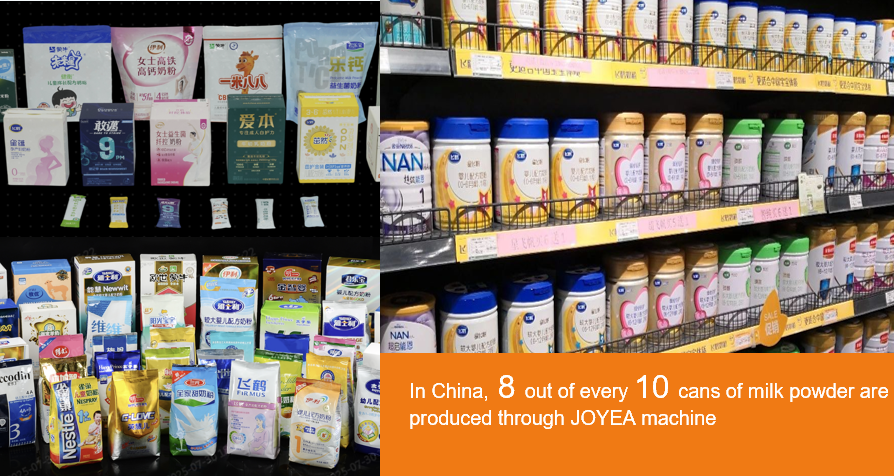
INDUSTRY PACK FORMATS
See the product before discussing the machine.
These pack samples and formats from JOYEA catalogue applications provide a concrete starting point for format and line-interface discussions.
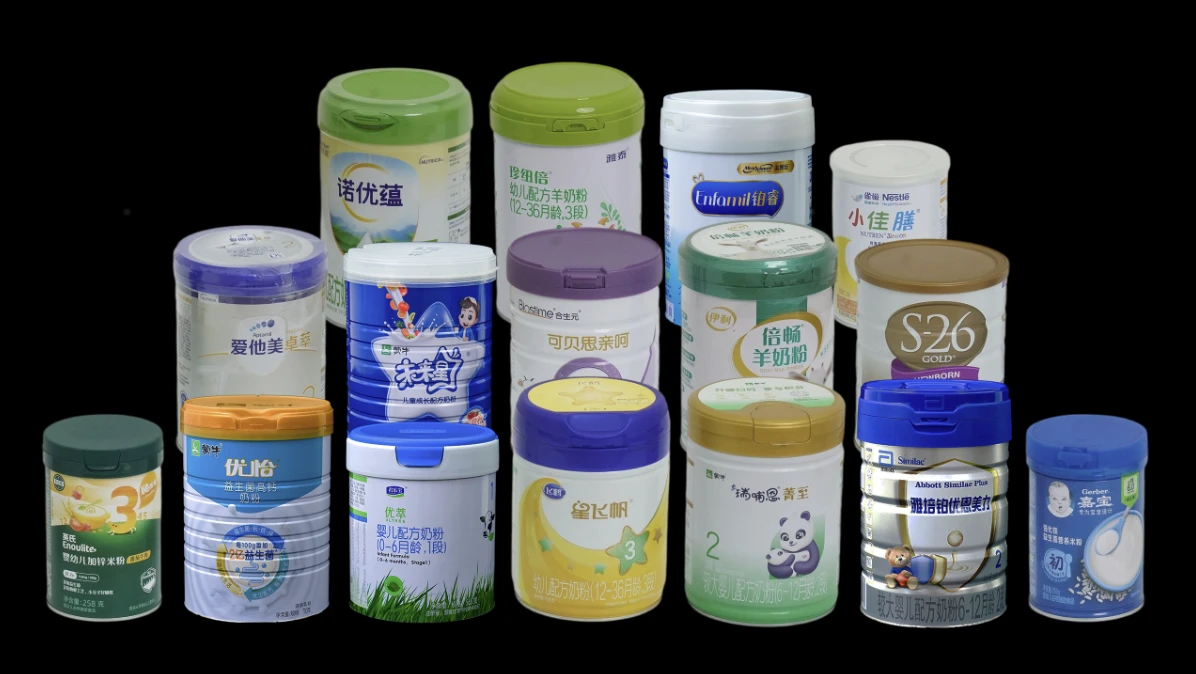
Infant formula milk powder can products
Converges key suppliers of dairy market
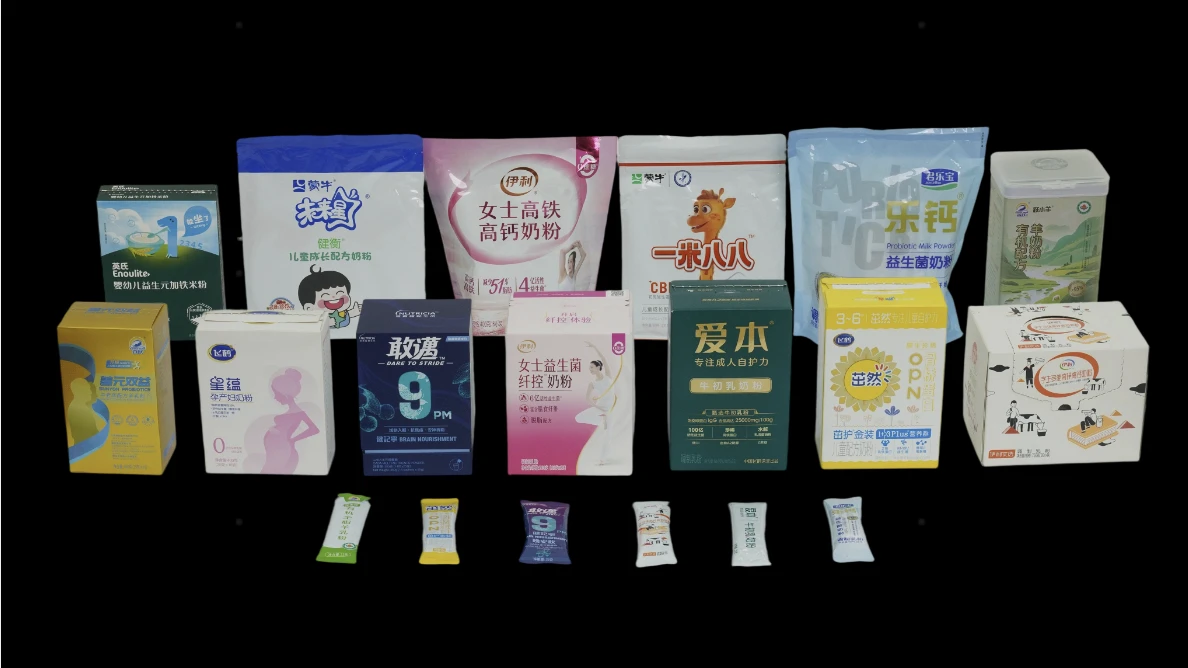
Milk powder Stick in Carton
Small portions of pockets for portable and single preparation.
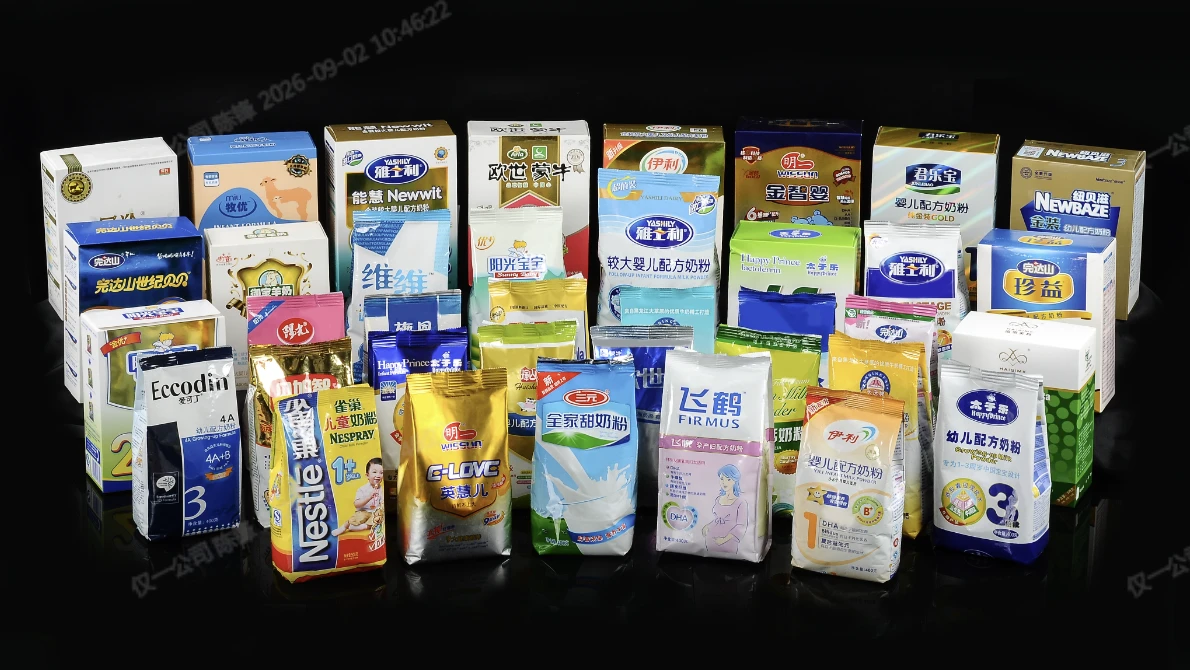
Soft bags and boxes for milk powder
VFFS soft bag covers home pack with large refills.
PRODUCT & PACKAGING PATHWAYS
Select the pack path from the product, then define the line boundary.
These pathways reorganise JOYEA industry applications and equipment platforms, with DOT adding inspection, data, end-of-line and global project interfaces.
Can line
Empty-can handling, tare weighing, precision filling, vacuum/nitrogen control, seaming, capping and inspection operate as one line.
Stick line
Portable single-serve milk-powder sticks continue into counting, cartoning or outer-pouch packaging.
Bag line
VFFS dosing and sealing are connected to checkweighing, metal detection and case packing.
Powder-to-pallet
Product handling, packaging-room hygiene, batch data and downstream automation are engineered across one system boundary.
ENGINEERING PRIORITIES
Turn risk into design inputs.
Critical challenges
- Foreign-body and allergen control
- Residual oxygen and shelf-life protection
- Tare variation and fill accuracy
Typical applications
- Milk powder stick packs
- Infant formula cans
- Large-format VFFS bags
Compliance & quality
- Infant-grade hygiene concept
- Batch traceability
- MAP and seam integrity control
QUESTIONS THAT SHAPE THE LINE
Turn packaging concerns into engineered responses.
These themes translate the industry, integrated-line and decision logic used by global benchmarks into deliverable DOT and JOYEA engineering responses.
D01CONCERN → RESPONSE → RESULT
Control residual oxygen in every format
- Concern
- Infant formula quality depends on oxygen exposure before filling and the integrity of the final seam or seal.
- DOT response
- Combine enclosed transfer, nitrogen dosing, residual-oxygen verification and seam or seal inspection.
- Expected result
- A controlled atmosphere strategy from powder buffer to packed product.
D02CONCERN → RESPONSE → RESULT
Compensate for can tare variation
- Concern
- Lightweight cans and variable tare can hide true product weight and increase giveaway.
- DOT response
- Use tare-gross weighing or statistically controlled net-weight feedback to the filling heads.
- Expected result
- Accurate declared weight with less product loss.
D03CONCERN → RESPONSE → RESULT
Separate allergens and foreign bodies by design
- Concern
- Shared powder rooms create risks at transfer points, filters and rework loops.
- DOT response
- Define hygienic zones, closed transfer, controlled rework and validated foreign-body barriers before choosing machines.
- Expected result
- A clearer hazard-control plan and easier audit readiness.
REPRESENTATIVE APPLICATIONS
Three expandable application proofs for every industry.
Current examples use public JOYEA applications. Future partner cases can be linked automatically by industry, technology and pack format.
▶Dairy powder
Complete milk-powder stick-pack line
Watch application ↗▶VFFS bag
VFFS bagging line with auger dosing
Watch application ↗▶Liquid stick pack
Complete liquid stick-pack line
Watch application ↗RELATED LINES
Only lines relevant to this industry's packaging pathways.
S04↗S02↗S01↗S03↗S06↗
Powder Processing & Handling
Receive · Dose · Blend · Transfer
Can & Jar Lines
Accurate filling · Low residual oxygen · Reliable closure
Stick & Sachet Lines
Powder · Granule · Liquid · Paste · Tablet
Bag & Pouch Lines
VFFS · Premade pouch · MAP-ready
Turnkey Factory Engineering
One scope · One programme · One accountable team